
Admin • 27 July 2024
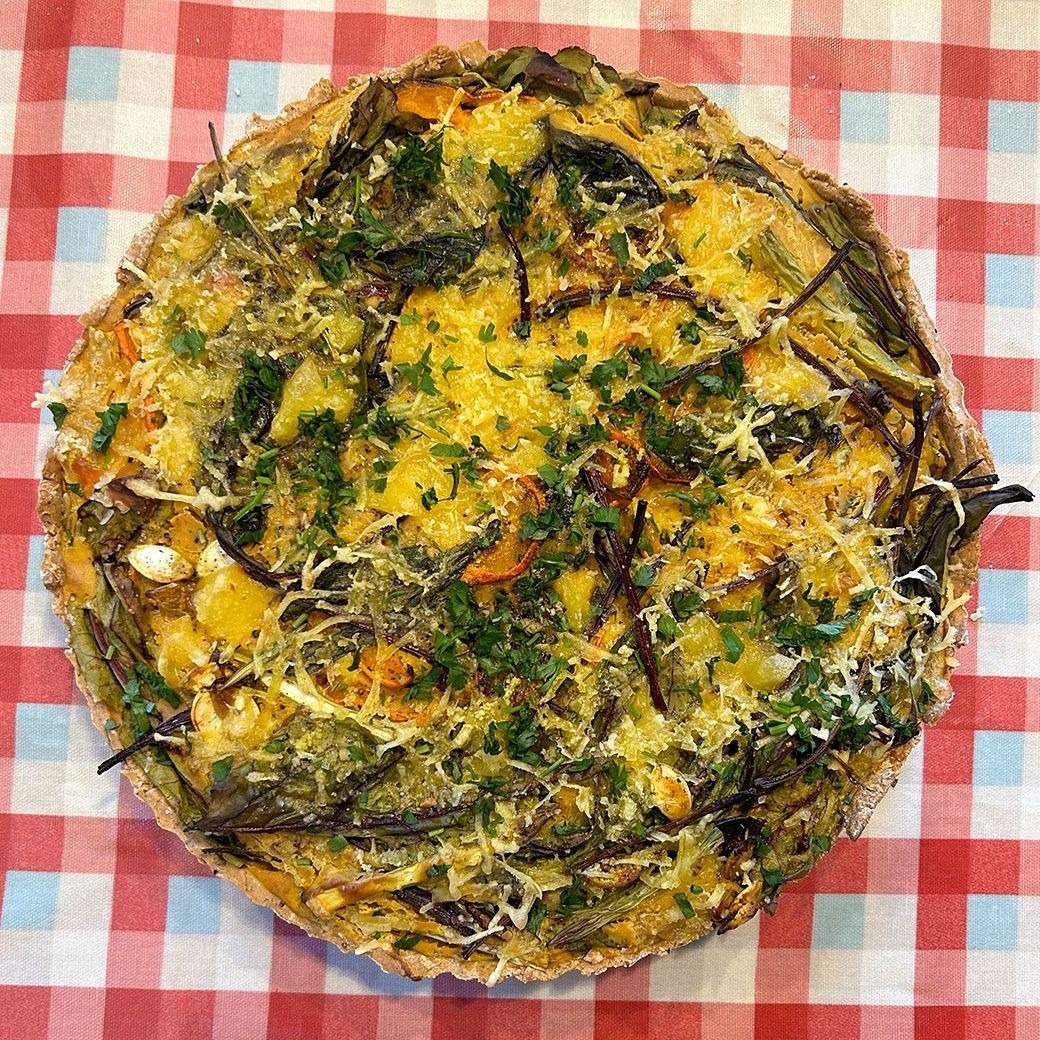
Gluten Free Vegan Quiche
Discover our new favorite, topped with vegan cheese, this gluten-free vegan quiche is delicious, wholesome and satisfyingly hearty. The crust, made from a nutritious blend of rice flour, buckwheat flour, and gram flour, is bound with flax seed ‘egg’, creating a crisp and golden base. The creamy silken tofu filling and mix of vegetables – we’ve included onions, squash, green beans and mixed herbs – can be customized with whatever you have on hand. Served warm for brunch or cold as a light dinner, it’s a delightful and versatile dish.
Ingredients
Base:
- 480 grams glutinous rice flour
- 180 grams buckwheat flour
- 180 grams gram flour
- 25 grams xanthan gum
- 4.5 grams salt
- 170 grams butter
- 20 grams ground flaxseed soaked in 120 grams water for at least
- 10 minutes
- 210 grams ice cold water
Filling (egg):
- 425g silken tofu
- 270g plant-based milk
- 40g nutritional yeast
- 3 cloves garlic
- 5g black salt
- 10g turmeric
- 5g paprika
- 2 tbsp lemon juice
- 2 tbsp olive oil
- 45 grams chickpea flour
- Filling (vegetable options):
- Use up whatever you have around, such as:
- 1 red onion
- half summer squash
- 200g beans – fava, green beans etc
- cherry tomatoes
- plenty of mixed herbs
- 1/2 block smoked applewood vegan cheese
Method
- Combine dry ingredients in a bowl (rice flour, chickpea, buckwheat) and mix in the butter
- Add the soaked flaxseed “egg” and cold water until it forms a dough. Chill in the fridge for a minimum of 20 minutes
- While the dough is chilling, prepare the filling. Add all the “egg” ingredients together in a hi-speed blender until smooth. You’re looking for a texture without grittiness.
- Choose your vegetable filling. If using squash, cut thin slices or cube and roast after tossing in oil, salt and pepper. Any other vegetables can be cut as you choose
- Roll out the dough on a sheet of parchment paper, you’re aiming for a thickness of 1cm.
- Butter and flour your chosen quiche tin. Flip the pastry onto the quiche tin, tuck it into place. Use a fork to make a few rows of holes in the pie crust.
- Pour in some of the tofu egg filling and arrange your vegetables, topping with more tofu egg, and finally, cheese it up!
- Bake in.a preheated oven of 180C for 40 minutes. Check with a toothpick in the centre to see if its done. It shouldn’t jiggle too much in the middle.
This recipe was provided by our brilliant retreat chef Aimee Walker. See Aimee on Instagram for more delicious recipes.
If you try this recipe, please leave a like, comment or message!

We can do hard things.
Why women are travelling solo.

I came across this Instagram post recently and it really struck a chord with me. Not because it promised a new routine, habit or life overhaul but because it focused on less, not more. In a world that constantly tells us we need to add, upgrade, optimise and hustle, it felt like a breath of fresh air. Here are a few ideas from it that really landed, and that feel especially relevant as we move towards 2026.