Admin • 12 July 2024

Savoury Granola 

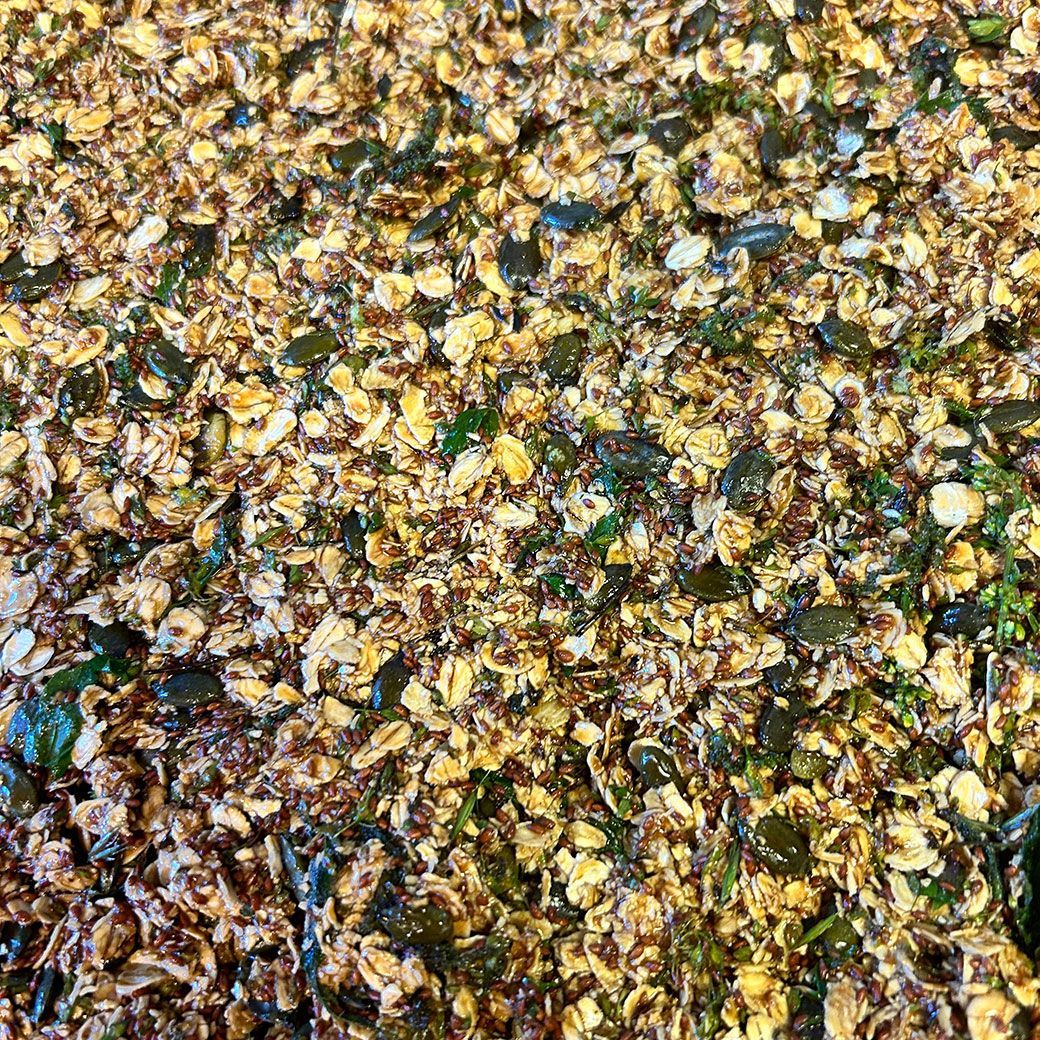
Transform your culinary creations with a unique twist on the classic granola. Our savoury granola, crafted with a blend of pumpkin seeds, sunflower seeds, pine nuts, and wild seeds such as nettle, wild mustard or hogweed, is the perfect addition to elevate your summer salads, soups, and dips. This nutty and crunchy medley not only adds texture but also infuses your dishes with a rich, earthy flavor. Whether you’re hosting a summer brunch or simply looking to enhance your everyday meals, this versatile granola will become your go-to topping for a burst of savory goodness.
Ingredients

Dry:


  • 200g oats
  • 100g bigger seeds – pumpkin, sunflower, pine nuts
  • 30g smaller seeds – sesame, cress, flax,
  • scattering of flavour seeds – mustard seeds, fennel, caraway
  • 100g nuts if you want – any will do, throw them in too!
  • handful of wild seeds – nettle, wild mustard, hogweed, dock, wild quinoa, plantain seeds,


Wet:


  • 4 tablespoons yeast extract
  • 3 tablespoons oil
  • 2 tablespoons maple syrup
  • whisk together until it has all formed one liquid. If it’s too pasty,
  • add more maple and oil.


Ingredients

  1. Maybe you could put on gloves for this, or spray your hands with oil.
  2. Mix the dry as well as your can.
  3. Lay the granola on a baking tray with parchment and bake for 30 mins or until dry and crispy on 180C.
  4. Would recommend turning the tray 15 mins in
  5. Let it cool completely before breaking it up and storing.
  6. How to use savoury granola
  7. On salads, toppings on soups, any dips – eg hummus

This recipe was provided by our brilliant retreat chef Aimee Walker. See Aimee on Instagram for more delicious recipes.

If you try this recipe, please leave a like, comment or message!


by Kristen Lackajis 3 December 2025
Brimming with flavour, this sweet and savoury miso roasted butternut squash is the ideal dish for a delicious winter feast.
by Laura Bell 27 November 2025
Fresh thoughts for Christmas
19 November 2025
In the relentless pace of modern life, we often wear busy-ness as a badge of honour. Our calendars are packed, our inboxes are full, and our minds are constantly whirring with to-do lists and responsibilities. We pour our energy into work, family, and social commitments, often leaving one crucial person overlooked: ourselves. The journey toward good wellbeing - a holistic state of physical, mental, and emotional health - can seem complex and intimidating. We read about intricate diets, intense exercise routines, and advanced meditation techniques. But the truth is, the most powerful and fundamental step is the simplest one: taking time for yourself. This isn't a luxury or an indulgence; it is the absolute foundation upon which all other forms of self-care and personal growth must be built. Why "Me-Time" is Non-Negotiable Thinking of "me-time" as selfish is a common misconception. In reality, it is a necessary act of self-preservation and rejuvenation. Imagine your energy and emotional reserve as a well. If you are constantly drawing water out for others without ever allowing it time to refill, the well will eventually run dry. When you are depleted, your ability to be a patient partner, an effective employee, or a supportive friend is severely diminished. Taking time for yourself is the conscious act of pausing the demands of the outside world and dedicating that space solely to your own needs. It is about shifting your focus inward, even if just for a few minutes. The Ripple Effect of Self-Connection When you prioritise this dedicated time, the benefits ripple out into every facet of your life: Stress Reduction: Stepping away from the constant noise allows your prefrontal cortex - the decision-making part of your brain - to rest. This pause can reduce levels of the stress hormone cortisol, leading to a calmer nervous system and clearer thinking. Problems that seemed insurmountable often become manageable after a period of quiet reflection. Emotional Regulation: When we are rushed and stressed, our emotions tend to be erratic and reactive. Time alone offers a chance to check in with yourself: How am I really feeling? What do I need right now? This awareness is the key to managing your feelings rather than letting them manage you. Increased Productivity: It may seem counterintuitive, but a short break can dramatically improve your performance. Taking time off allows for "diffuse thinking," where your brain makes connections and solves problems in the background. You come back to your tasks with renewed focus and fresh ideas. A Stronger Sense of Self: Constant interaction with others means we are often adjusting our behaviour to fit a social context. Solitude allows you to reconnect with your authentic self - your values, your dreams, and your genuine interests - free from external judgments or expectations.