
Admin • 28 March 2023

Minted Pea & Watercress Soup

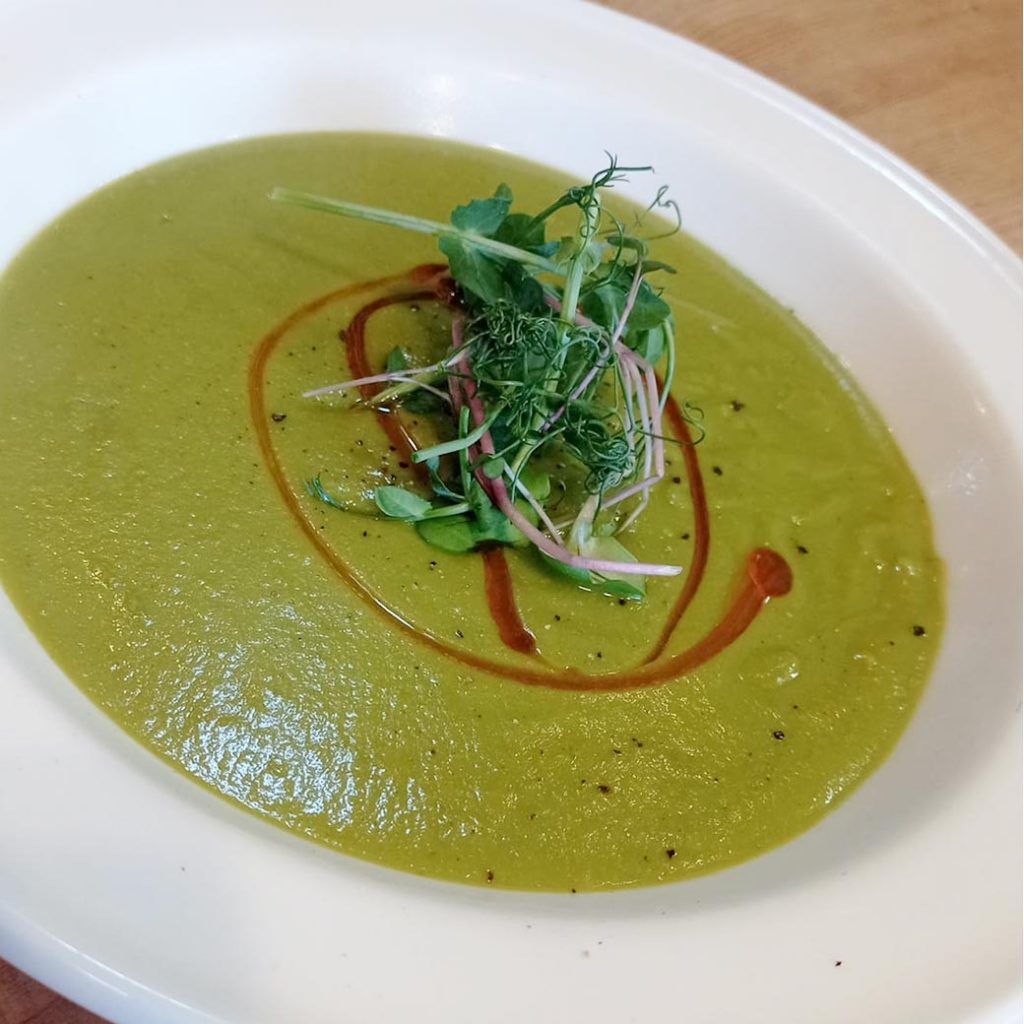
Here is another delicious recipe from our retreat chef Cathy. This healthy green soup is great for spring with all these lovely fresh flavours. We think the fresh mint is a perfect match. You can use fresh or frozen peas and watercress can be replaced with spicy salad leaves of your choice. Serve with warm sourdough bread and finish with micro greens and a chilli oil drizzle.
Ingredients

Makes 4/5 portions


  • 1 bunch of watercress, large (washed)
  • 800ml of vegetable stock – I use Bouillon
  • 2 tbsp of olive oil
  • 1 large onion, finely chopped
  • 5/6 celery sticks, roughly chopped
  • 1 potato, cubed
  • 1 bunch of fresh mint, roughly chopped
  • 400g of shelled peas, fresh or frozen

Method

Coarsely chop the watercress, stalks and all, and place in a small saucepan with the stock. Bring to a simmer for 5 minutes, and then remove from the heat and leave to infuse


Heat the oil in a large pan and add the onion. Cook on a low heat until softened but not coloured. Add the potato, stir, cover and cook until soft about 10 minutes. Add the mint, peas and watercress and finally the stock. Season and simmer for 2 minutes


Place the soup in a blender and purée, then return the soup to the saucepan (you can strain the soup through a sieve if you like, to get rid of any tough-to-blend stalky bits, but if you have a powerful blender like a Vitamix, it should be able to purée everything into a silky smooth soup)


Serve with crusty sourdough, drizzle with chilli oil and top with micro greens for that 5* finish

by Kristen Lackajis 3 December 2025
Brimming with flavour, this sweet and savoury miso roasted butternut squash is the ideal dish for a delicious winter feast.
by Laura Bell 27 November 2025
Fresh thoughts for Christmas
19 November 2025
In the relentless pace of modern life, we often wear busy-ness as a badge of honour. Our calendars are packed, our inboxes are full, and our minds are constantly whirring with to-do lists and responsibilities. We pour our energy into work, family, and social commitments, often leaving one crucial person overlooked: ourselves. The journey toward good wellbeing - a holistic state of physical, mental, and emotional health - can seem complex and intimidating. We read about intricate diets, intense exercise routines, and advanced meditation techniques. But the truth is, the most powerful and fundamental step is the simplest one: taking time for yourself. This isn't a luxury or an indulgence; it is the absolute foundation upon which all other forms of self-care and personal growth must be built. Why "Me-Time" is Non-Negotiable Thinking of "me-time" as selfish is a common misconception. In reality, it is a necessary act of self-preservation and rejuvenation. Imagine your energy and emotional reserve as a well. If you are constantly drawing water out for others without ever allowing it time to refill, the well will eventually run dry. When you are depleted, your ability to be a patient partner, an effective employee, or a supportive friend is severely diminished. Taking time for yourself is the conscious act of pausing the demands of the outside world and dedicating that space solely to your own needs. It is about shifting your focus inward, even if just for a few minutes. The Ripple Effect of Self-Connection When you prioritise this dedicated time, the benefits ripple out into every facet of your life: Stress Reduction: Stepping away from the constant noise allows your prefrontal cortex - the decision-making part of your brain - to rest. This pause can reduce levels of the stress hormone cortisol, leading to a calmer nervous system and clearer thinking. Problems that seemed insurmountable often become manageable after a period of quiet reflection. Emotional Regulation: When we are rushed and stressed, our emotions tend to be erratic and reactive. Time alone offers a chance to check in with yourself: How am I really feeling? What do I need right now? This awareness is the key to managing your feelings rather than letting them manage you. Increased Productivity: It may seem counterintuitive, but a short break can dramatically improve your performance. Taking time off allows for "diffuse thinking," where your brain makes connections and solves problems in the background. You come back to your tasks with renewed focus and fresh ideas. A Stronger Sense of Self: Constant interaction with others means we are often adjusting our behaviour to fit a social context. Solitude allows you to reconnect with your authentic self - your values, your dreams, and your genuine interests - free from external judgments or expectations.