Why Retreat?
I often wonder why do we need to retreat? Why bother taking time out for yourself? Is it just a way to while away a few days or is it far more important than that? It always fascinates me how every year, by law, we have to have our cars MOT’d: if they’re not road worthy we find the money to fix them to get them back on the road. But when it comes to ourselves, we don’t have mandatory MOT’s (which by the way I think we should) and we often keep running ourselves into the ground without stopping…
… until one day we can’t get our of bed due to say a back injury, we can’t go to work and then what?
We start to worry about how we might continue with our job and how this might impact us finically and on the downward spiral goes. Is it at this point we begin to wonder whether we should make changes to our daily habits to improve our health? Your health really should be your primary focus, even before the health of your loved ones. If you are sick and diseased how can you look after anyone else? So we say a retreat is more than a few nights sleeping in a comfy bed with white cotton sheets, it’s a necessity and we should, all retreat every year.
Having a retreat away from home each year has been a massive piece in my healing jigsaw. I have lived a life of control, pushing and forcing many aspects of my life for so long. This has been reflected in my control of exercise, daily work outs and my inability to have rest days. Sadly so much of my exercise habit was about how many calories I could burn not how much I could enjoy myself. A year on from last October when we were last in the Lake District and I have had out a lot of talking therapy, found security in my mental well-being, experienced more confidence in my own skin, which I believe has led me to finding true love.
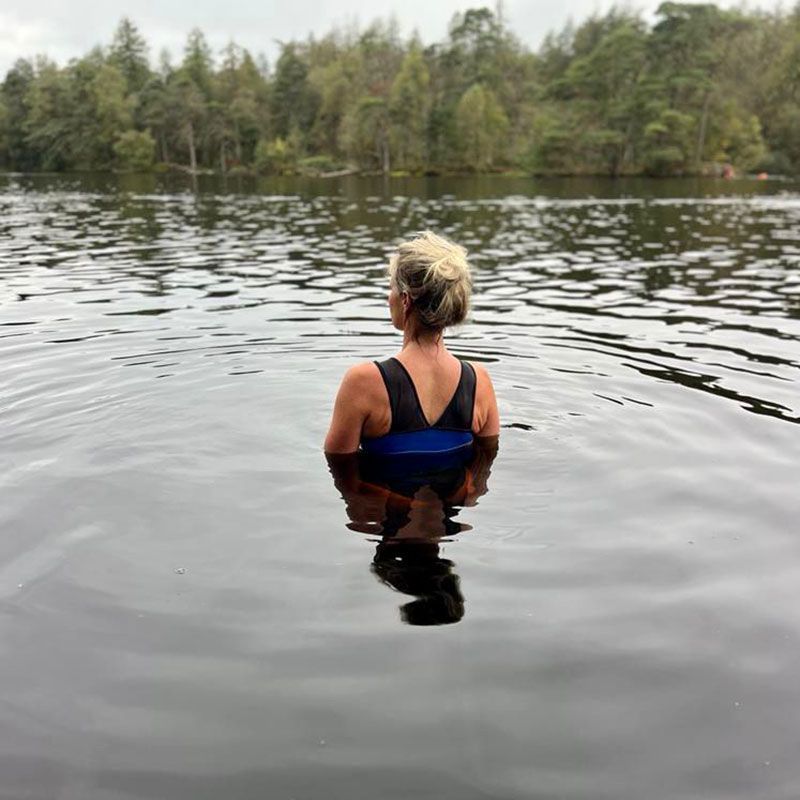
On the Lakes swim retreat we enjoyed many beautiful swimming experiences but the first day for more was divine. As I sat acclimatising before entering the water, I was caught off guard by thoughts of the same lake the previous year. I took a moment reflecting back on that day. It was cap and goggles on, straight in, thinking how far can I go, can I do 20 minutes in cold water, will I get to that buoy before I have to get out to help with guests. This year however I was a different person. I took time to get in embracing the sensations, splashing water on my face as I sat on a rock watching the leaves fall silently. Then slipping in, gliding through the silk like water, swimming with my face above the water, which meant I could see the beauty that was all around. I was feeling, I was noticing, I was witnessing. I wasn’t just going through the motions. I was checking in in every sense of the word and it was glorious.
A retreat is a much needed opportunity to check in with self. Time flies by, the years race by and before you know it five years has passed. What if you have been on a negative trajectory all that while? Taking a retreat each year is an opportunity to stop and reflect on where you are at. Asking yourself what little changes need to be made so that goals can be achieved long term. I don’t mean huge life goals but goals like being able to bounce out of bed each morning with energy, having the calmness of mind to deal with life challenges and having peace and contentment each and every day. It is through these daily wins that allow the huge life goals to graciously fall into place.
Is it time you invested in self?